
Financial Elder Abuse in Orange County & LA County
Top Ranked Trust & Probate Lawyers in California
☰ Quick Facts About This Page
- Elder financial abuse is often hidden
- Family and caregivers are common “actors”
- Sudden estate plan changes matter
- Unexplained withdrawals are red flags
- Wrongful transfers can be challenged
- Probate court can order asset return
- Double value penalties may apply
- Attorney fees may be recoverable
- Evidence and timelines drive outcomes
- Courts can freeze stolen assets
Stopping Financial Elder Abuse in California
Financial elder abuse happens when someone takes advantage of an older adult for personal gain, for example an older parent or relative who is not of complete sound and mind and unaware of their own trust matters. It can involve money, real estate, beneficiary changes, or control over accounts, and it is often committed by someone in a position of trust.
In California, financial elder abuse is taken seriously and is addressed through both probate and civil courts, especially when asset transfers and estate plans are involved.
These cases often start with subtle warning signs. A new “friend” shows up, a caregiver becomes involved in finances, a trustee starts refusing transparency, or a parent is suddenly pressured to sign documents that change everything. Because this conduct often occurs behind closed doors, it may not be discovered until significant damage is already done.
A financial elder abuse attorney from Max Alavi, Attorney at Law, APC fiercely represents elders, family members, and heirs in claims to stop ongoing exploitation and recover wrongfully taken assets throughout California, including matters handled in Orange County and Los Angeles County probate courts.
Our Trust Litigation Case Process

1. Case Evaluation
We begin with a full review of the trust, will, financial records, and family history. Our legal team will identify your rights, deadlines, and the best legal path before anything is filed.

2. Court Filings
The case formally begins when a probate petition or trust lawsuit is filed in California probate court, often in Orange County Superior Court. This step sets the legal issues, brings all parties into the case.

3. Discovery and Settlement
Both sides exchange documents, take depositions, and file motions to address disputes. Many trust and probate cases resolve here through settlement discussions or court ordered mediation.

4. Trial and Resolution
If no agreement is reached, the case proceeds to trial before a probate judge. After a ruling, the court orders distributions, removals of fiduciaries, or financial recovery, and we handle enforcement or appeals if needed.
Begin Your Free Case Evaluation Now
Call to schedule a free and confidential consultation with a trust litigation lawyer.


Common Financial Elder Abuse Issues We Handle
Financial elder abuse can take many forms. Our law firm and legal staff regularly represents clients in matters involving issues such as:
- Misuse of powers of attorney
- Coerced gifts or property transfers
- Improper changes to wills or trusts
- Theft or embezzlement by caregivers
- Exploitation by trustees or family members
- Financial abuse connected to cognitive decline
- Isolation used to control decisions
- Missing property, accounts, or valuables
- Manipulation by new spouses or recent acquaintances
California’s Elder Abuse and Dependent Adult Civil Protection Act defines “financial abuse” broadly. Welfare and Institutions Code section 15610.30 includes taking, concealing, or retaining an elder’s property for a wrongful purpose, through fraud, or by undue influence.
When the conduct involves pressure and manipulation, Welfare and Institutions Code section 15610.70 defines undue influence and lists factors courts consider, such as vulnerability and the influencer’s authority or control.
Top FAQs About Financial Elder Abuse
When should I speak with a financial elder abuse attorney?
If you see sudden transfers, unexplained withdrawals, isolation, or a new person controlling finances, it is smart to get legal advice early. The earlier you act, the easier it is to preserve records and prevent further loss.
What legally counts as financial elder abuse in California?
Welfare and Institutions Code section 15610.30 defines financial abuse to include taking or retaining an elder’s property for wrongful use, by fraud, or by undue influence.
Does undue influence matter in elder abuse cases?
Yes. Welfare and Institutions Code section 15610.70 defines undue influence and lists factors courts consider, such as vulnerability and the influencer’s control.
Can the probate court order property returned?
Often, yes. Probate Code section 850 is commonly used to ask the court to determine ownership and order property transferred back when the evidence supports the claim.
Can the person who took assets be hit with double value liability?
In qualifying cases, yes. Probate Code section 859 allows liability for twice the value of property recovered when the court finds a bad faith wrongful taking or concealment, including taking connected to elder financial abuse.
Are attorney fees available in financial elder abuse cases?
They can be. Welfare and Institutions Code section 15657.5 provides for an award of reasonable attorney’s fees and costs when financial abuse is proven.
Do these cases always go to trial?
No. Many resolve after bank records, medical records, and witness testimony clarify what happened. A strong litigation plan still matters, because leverage usually comes from being ready for a contested hearing.
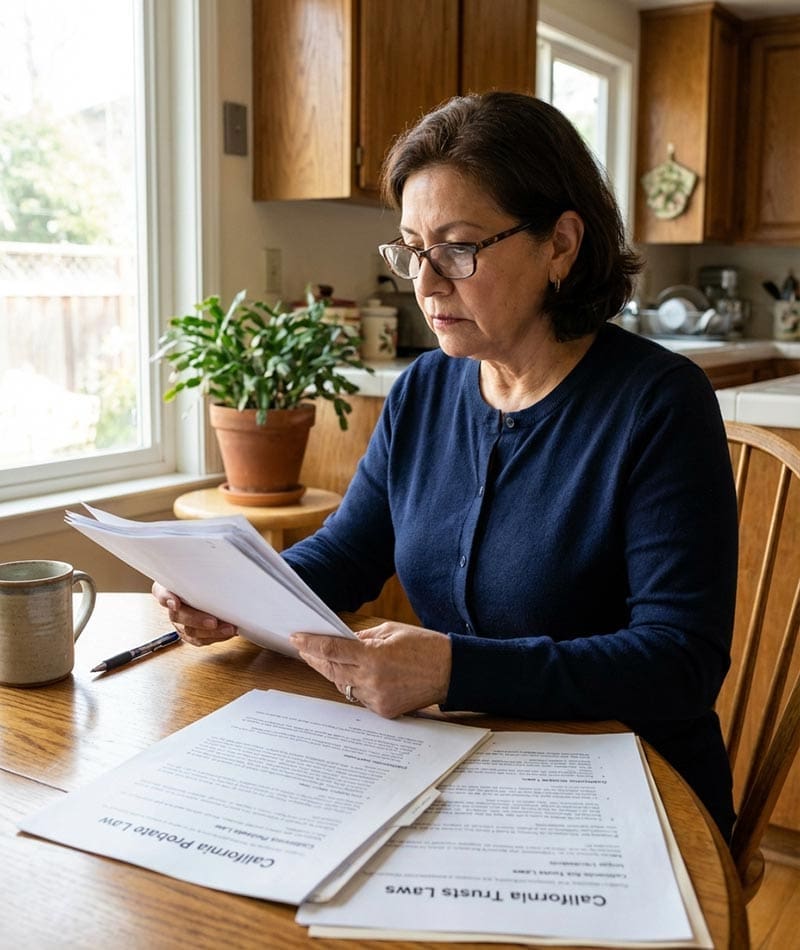
Laws and Court Involvement for Recovering Assets
Financial elder abuse claims often overlap with probate litigation. That is because the same conduct that takes assets can also affect a trust, a will, or how property is titled. One practical method used in many Orange County and Los Angeles County cases is a Probate Code section 850 petition, which can be used to request the probate court to determine ownership and order property transferred back to the estate, trust, or the rightful owner when the facts support it.
In more serious cases, California law can add meaningful financial consequences for those acting in bad faith. Probate Code section 859 allows the court to impose liability for twice the value of property recovered when someone, in bad faith, wrongfully takes or conceals property, including taking tied to elder financial abuse as defined in Welfare and Institutions Code section 15610.30.
In addition to orders from probate court, Welfare and Institutions Code section 15657.5 outlines that when financial abuse is proven, the court must award reasonable attorney’s fees and costs, and it also includes additional solutions when a higher level of misconduct is proven.
In Orange County, the Probate and Mental Health unit specifically lists elder and dependent adult abuse among the matters it handles, which is one reason local probate practice and procedure matters in these cases.
Common Issues and Solutions in Financial Elder Abuse Cases
Financial elder abuse cases move best when the facts are organized and the requests to the court are clear. Judges want evidence, timelines, and records, not just suspicions.
The probate court can issue orders that protect assets, require disclosures, and unwind improper transfers in the right case. When the abuse involves a fiduciary such as a trustee or agent under a power of attorney, the court can also address accounting and conduct issues while the asset recovery claim is litigated.
Common Issues in Financial Elder Abuse |
Possible Remedies in Probate Court |
| Misuse of power of attorney, new agent takes control, unexplained withdrawals, checks written to self | Orders for records and return of funds, asset recovery petitions, protective restrictions |
| Coerced transfers or gifts, deed changes, large “loans,” sudden beneficiary changes | Orders setting aside transfers where proven, recovery of property, court findings on undue influence |
| Missing assets, valuables disappear, accounts not disclosed, property titled to others | Probate Code 850 petition, turnover orders, court determination of ownership |
| Caregiver exploitation, payments increase, “reimbursements” lack proof, isolation escalates | Court ordered disclosures, recovery requests, elder abuse findings when supported |
| Trustee exploitation, refusal to explain transactions, favoritism, suspicious spending | Accounting orders, transaction review, recovery and surcharge related remedies |
| Bad faith taking proven, concealment, wrongful retention, abuse connected to undue influence | Probate Code 859 double value liability in qualifying cases |
Expert Legal Help in Financial Elder Abuse Cases
Financial elder abuse cases require more than technical legal knowledge. They demand courtroom experience, strategic judgment, and a clear understanding of how California probate judges evaluate undue influence, credibility, and financial records. Max Alavi, Attorney at Law, APC has decades of experience handling complex trust and probate disputes throughout California. The firm represents clients in high conflict matters involving significant assets, family owned businesses, and long standing family conflict.
Recognized by Martindale Hubbel and Lawyers.com as a Client Champion, attorney Max Alavi is a strong advocate for vulnerable seniors and their families. Our firm often handles cases where the dedication of our legal staff routinely exposes bad actors who breach their duties. In a recent high worth case, we represented a beneficiary against a professional fiduciary accused of mismanaging assets, successfully handling a case involving $30 million dollars in assets.
Whether the goal is stopping ongoing exploitation, recovering wrongfully taken assets, or pursuing court orders that protect an elder and the estate plan, the firm approaches each case with a focus on protecting client rights and achieving the best results for our clients.
Finanical Elder Abuse
Areas We Serve
At Max Alavi, Attorney at Law, we have decades of experience in dealing with complex trust litigation matters throughout California. When you hire our legal team, you are bringing on the best and toughest litigators around to aggresively fight on your behalf.
Financial Elder Abuse
Areas We Serve
At Max Alavi, Attorney at Law, we have decades of experience in dealing with complex trust litigation matters throughout California. When you hire our legal team, you are bringing on the best and toughest litigators around to aggresively fight on your behalf.
What Our Amazing Clients Have To Say



Why Clients Choose Max Alavi, APC
- Super Lawyers recognition based on peer review
- Extensive experience in California probate law
- Millions recovered in trust and probate litigation
- Strategic handling of trust and estate disputes
- Proven advocacy for surviving spouses and heirs
- Clear guidance through complex probate matters
- Outstanding dedication to every one of our clients




Let's Work Together - Tell Us Your Needs
At Max Alavi, Attorney at Law, APC, we understand the complexities of California probate law and are committed to providing solutions for trust and estate disputes. Contact us today to speak with one of our legal staff.