Long Beach Financial Elder Abuse Attorney

Top Ranked Trust & Probate Lawyers in California

Google 5-Star Rated

5-Star Client Rating | Read Our Reviews

At Max Alavi, Attorney at Law, we are dedicated to protecting the rights and financial well-being of seniors in Long Beach. Our team brings years of focused experience in Financial Elder Abuse, combining in-depth legal knowledge with a commitment to compassionate client care. We understand the sensitivity and urgency of these cases, ensuring that families and their loved ones receive the advocacy and support they deserve. Clients trust us because:

  • We offer personalized legal solutions tailored to each unique situation.
  • Our proven track record in Long Beach means your case is in expert hands.
  • We're known for our accessibility and clear communication throughout every step.
"Our mission is to safeguard seniors from financial harm by bringing abusers to justice and recovering what rightfully belongs to our clients."
If you need experienced, trustworthy representation for Financial Elder Abuse matters in Long Beach, Max Alavi, Attorney at Law is here to help you move forward with confidence.

Our Trust Litigation Case Process

7

Free Consultation & Case Evaluation

1. Case Evaluation

We begin with a full review of the trust, will, financial records, and family history. Our legal team will identify your rights, deadlines, and the best legal path before anything is filed.

2. Court Filings

The case formally begins when a probate petition or trust lawsuit is filed in California probate court, often in Orange County Superior Court. This step sets the legal issues, brings all parties into the case.

Discovery and Settlement Process

3. Discovery and Settlement

Both sides exchange documents, take depositions, and file motions to address disputes. Many trust and probate cases resolve here through settlement discussions or court ordered mediation.

4. Trial and Resolution

If no agreement is reached, the case proceeds to trial before a probate judge. After a ruling, the court orders distributions, removals of fiduciaries, or financial recovery, and we handle enforcement or appeals if needed.

Begin Your Free Case Evaluation Now

7

Call to schedule a free and confidential consultation with a trust litigation lawyer.
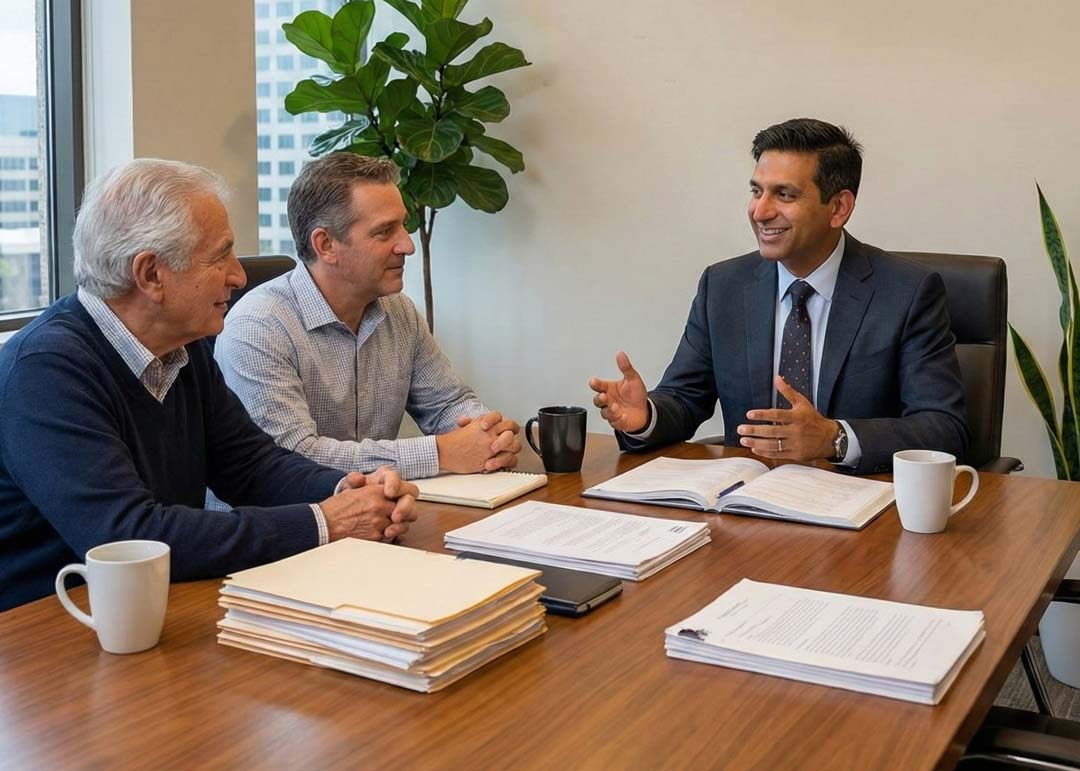
About Max Alavi, Attorney at Law

Max Alavi, Attorney at Law in Long Beach is widely recognized for its dedication and skill, particularly in the field of Financial Elder Abuse as well as other areas of trust and estate law. Established by Max Alavi, whose career is marked by more than a decade of legal excellence, the firm’s history is rooted in a commitment to delivering high-caliber legal counsel and compassionate client service. From the outset, Max Alavi, Attorney at Law has built a foundation based on integrity, in-depth knowledge of probate and trust matters, and a passion for protecting clients’ legacies and financial well-being.

Serving clients throughout Long Beach, Max Alavi, Attorney at Law distinguishes itself by combining rigorous legal analysis with a warm, personalized approach to every case. The firm’s expertise in Financial Elder Abuse is complemented by a wide array of services designed to address complex estate challenges with integrity and transparency. The team’s unique blend of professionalism, accessibility, and thorough understanding of both legal and emotional dimensions empowers individuals and families to navigate difficult situations with confidence. At Max Alavi, Attorney at Law, steadfast advocacy and client-centered values remain the guiding principles behind every legal solution.

7

An Interesting Fact About Financial Elder Abuse in Long Beach

In California, financial elder abuse is not just limited to obvious acts like theft or fraud; it also includes the improper use of powers of attorney or undue influence over property and assets. Notably, the law allows certain relatives or government agencies in Long Beach to file civil actions on behalf of vulnerable seniors, even if the elder is unable or unwilling to come forward. This provision greatly increases protections for elders against financial exploitation in California.

7

Overview of Financial Elder Abuse Laws in Long Beach

Financial elder abuse in Long Beach is addressed through a complex web of California statutes, including sections of the Elder Abuse and Dependent Adult Civil Protection Act and related probate laws. As detailed by Max Alavi, Attorney at Law, these regulations are designed to safeguard seniors from financial exploitation, which can include theft, fraud, undue influence over wills or trusts, and the misappropriation of assets. Local regulations make it clear that such abuse is not only a civil matter but may also result in criminal charges. Victims, as well as their families, have specific rights in pursuing both financial restitution and protective orders. The court process often starts with gathering evidence of abuse, followed by legal petitions for recovery of misused assets, and potentially, litigation in probate or civil courts to ensure justice and restore senior citizens’ rights.


  • Perpetrators of financial elder abuse may be subject to court-ordered restitution, punitive damages, and, in severe cases, criminal penalties.
  • California law mandates swift action, allowing for asset freezes and temporary restraining orders during pending investigations.
  • Successful resolutions frequently depend on the expertise of experienced local counsel who understand the nuances of both state and Long Beach-specific procedures.


"Protecting the financial interests of elders requires proactive legal strategies and a thorough understanding of both the law and the local court environment." – Insights from Max Alavi, Attorney at Law


The experienced team at Max Alavi, Attorney at Law leverages deep knowledge of Long Beach’s legal landscape in addressing financial elder abuse cases. Their approach centers on a thorough evaluation of relevant estate planning documents, transaction histories, and family dynamics to build strong legal arguments. With a focus on outcomes such as asset recovery, imposition of civil penalties, and the potential disinheritance of abusers, the firm prioritizes swift resolution to protect vulnerable elders. Clients benefit from their familiarity with local court processes, as well as their ability to negotiate settlements or pursue aggressive litigation where necessary. By providing comprehensive guidance through each phase of a case, Max Alavi, Attorney at Law, helps clients understand their options—ensuring the best path forward under Long Beach’s specific laws and court practices.

7

Other Services Available

Financial Elder Abuse

https://www.octrustslawyer.com/financial-elder-abuse/

7

Protecting Your Loved Ones from Financial Elder Abuse — Compassionate Advocacy from Max Alavi, Attorney at Law

If you suspect financial elder abuse, it’s crucial to act swiftly to safeguard your loved one’s assets and well-being. The experienced attorneys at Max Alavi, Attorney at Law, are dedicated to thoroughly evaluating every detail of your case to build a strong defense and stop the abuse. Take the first step today by calling (949) 706-1919 for a free, 30-60 minute initial consultation. Our approachable, knowledgeable team is here to guide you with professionalism and care. Don’t wait—reach out to get the protection your family deserves.

7

Long Beach Demographics

Long Beach, California, is a major coastal city located in Los Angeles County with an estimated population of approximately 456,000 residents as of the mid-2020s, making it one of the largest cities in Southern California. Long Beach's demographics reflect both its size and the diversity characteristic of the Los Angeles metropolitan region.

  • Population Size: Roughly 456,000 residents, with a steady but moderate growth trend in recent years.
  • Age Distribution: The median age is approximately 35 years. About 23% of the population is under age 18, while adults aged 25 to 54 represent the largest age group. Seniors (age 65+) comprise about 12% of residents, a key consideration for elder law matters.
  • Diversity: Long Beach is a highly diverse city, with prominent Hispanic or Latino (roughly 43%), White (non-Hispanic) (about 25%), African American (12%), and Asian (13%) communities. The city is home to significant populations of Cambodian, Filipino, and Pacific Islander residents as well.
  • Socioeconomic Indicators: The median household income is estimated at over $73,000, which is about average for Los Angeles County. Per capita income is approximately $34,000. Poverty rates hover around 15%.
  • Notable Trends: Long Beach has experienced growth among both young professionals and aging populations. The city's population of older adults is rising, leading to greater demand for elder-focused legal services.
Long Beach’s dynamic and diverse population, coupled with a significant senior community, makes it an important jurisdiction for elder law, probate, and related legal matters.

Long Beach Probate Court System

Probate and trust matters for residents of Long Beach fall under the jurisdiction of the Superior Court of California, County of Los Angeles. This trial court system manages a wide range of probate cases, with key operations centered at the Stanley Mosk Courthouse in downtown Los Angeles.

  • Court Name & Venue: Stanley Mosk Courthouse (Central District), located at 111 North Hill Street, Los Angeles, is the principal venue for probate proceedings for Long Beach residents.
  • Core Probate Case Types:
    • Decedents’ estates (probate of wills and intestate estates)
    • Trust administration and disputes
    • Conservatorship proceedings, including those concerning the protection of elders and incapacitated adults
    • Guardianships of minors
    • Matters involving elder financial abuse and related petitions for accountings, asset recovery, or removal of fiduciaries
    • Other fiduciary litigation and estate disputes
  • Notable Features for Legal Clients:
    • Specialized probate departments staffed by experienced judicial officers
    • Elder Abuse and Protective Order hearings, addressing urgent claims, including financial elder abuse under the California Elder Abuse and Dependent Adult Civil Protection Act
    • Robust online case access for filings, status reviews, and records searches
    • Dedicated procedures and resources for addressing elder abuse, including expedited hearings in cases alleging immediate harm
    • Public resources for probate self-help, but legal counsel is recommended given the complexity of rules and processes
  • Relevant Local Rules: Long Beach cases are handled according to the Los Angeles County Local Court Rules as well as the California Probate Code, both of which set forth detailed procedures for notice, filings, deadlines, and hearings.
The Los Angeles County probate system’s capacity and specialization make it effective for handling sensitive issues such as financial elder abuse, with resources for urgent protective interventions where necessary.

Family Demographics in Long Beach

Long Beach demonstrates a range of family structures and household types, reflecting its status as a major urban center.

  • Household Composition:
    • Approximately 60% of households are classified as family households.
    • About 40% of households are non-family, including individuals living alone—many of whom are seniors.
    • The average household size is about 2.8 people, with the average family size over 3.4 individuals.
  • Marital Status & Divorce Rates:
    • Marriage rates are typical for Southern California cities, while estimated divorce rates are in line with statewide norms (divorce rate for Los Angeles County is approximately 6–7 per 1,000 married adults annually).
  • Economic Indicators:
    • Median family household income is around $83,000. Per capita income is estimated at $34,000–$35,000.
    • There is significant income diversity, with some areas facing rates of poverty higher than the city average, and others reflecting substantial affluence.
  • School Systems:
    • The Long Beach Unified School District (LBUSD) serves the majority of the city, offering a wide network of elementary, middle, and high schools, including magnet programs and schools recognized for academic excellence.
  • Popular Social Programs:
    • Long Beach Department of Health and Human Services supplies extensive senior and family support services, including the Resource Center for Elders, senior nutrition programs, and adult protection resources.
    • Additional programs focus on youth enrichment, early learning, afterschool care, and support for vulnerable families.
For individuals seeking legal assistance on matters such as financial elder abuse, Long Beach’s growing senior population and robust social service network are important considerations, as is the complexity of navigating family relationships and property rights within a diverse urban context.

Trust Litigation

Areas We Serve

At Max Alavi, Attorney at Law, we have decades of experience in dealing with complex trust litigation matters throughout California. When you hire our legal team, you are bringing on the best and toughest litigators around to aggresively fight on your behalf.

What Our Amazing Clients Have To Say
Max Alavi and team are amazing. They helped us with a pretty difficult probate matter and were incredibly helpful to get it resolved. They also work with wonderful real estate partners, and their entire in-team office is so helpful. 10/10 would recommend!
Great living trust services and excellent communication with Mr. Alavi and his staff . I would recommend this law office to everyone. Thank you so much 😊
Response from the owner:Iman, thank you so much for the kind words! We are thrilled to hear that you had a positive experience with Max Alavi, OC Trusts Lawyer's entire team.

Providing clear communication and peace of mind through our living trust services is our top priority. We truly appreciate your recommendation to others in the community. It was a pleasure assisting you with your legal matters!
Ilda Acevez from costa mesa
I'm so appreciative of Max and the team that he has with him they were always so professional walk me through everything any questions I had any time they answered I felt very welcome and very safe me being confused not knowing what probate was all about they were always there for me 100% walking me through I will always be grateful and will recommend them to family and friends always so nice and professional thank you thank you thank you
Response from the owner:Ilda, thank you so much for your kind words and for sharing your thoughtful review! We truly appreciate your trust in OC Trusts Lawyers. We value you as a client and are happy to assist your family and friends with any Trust and Contested Probate matters. Please do not hesitate to reach out with any questions or assistance in the future!
Great customer service christina was very helpful and very polite will recommend you to my family and friends
Professional and knowledgeable. We are grateful that we chose Max Alavi for our attorney.
I can only say good things about Max Alavi law office, the whole team did an impeccable job on the Heggstad & Probate. Ms Angela Zeng did a great job representing me in court, with excellent results. Izabela did an amazing job helping me with her knowledge about me being the Trust Administrator. She was patient, kind & so informative. She did an excellent job. Also Diana guided me along the way as well, she was also very knowledgeable, kind & responsive to my needs in a quick manner. To sum it up, I would highly recommend this law firm,you will not be disappointed. Once again Thank you all for such an awesome result on the Probate.
Highly recommend. Team had so much patience and was very thorough thru the entire process. Thank you Max and team!
Response from the owner:Daniela, thank you for the high recommendation! Max Alavi and the entire team at OC Trusts Lawyer are so please we could assist you. We understand that the Living Trust & Estate Planning process can feel overwhelming, which is why we prioritize bein thorough and patient with every client.
We appreciate you trusting our Orange County Trust & Estate firm with your legal matters!
I had the pleasure of working with Max, and I cannot recommend him highly enough. Beyond the technical expertise, Max brought warmth, professionalism, and a calming presence to a process that can feel overwhelming. I truly felt that my interests were cared for every step of the way.

If you are looking for a trustworthy, knowledgeable, and compassionate estate planning attorney, look no further. Max is exceptional.
Response from the owner:Thank you so much for your wonderful review, Xinyue! The team at OC Trusts Lawyer truly appreciate your kind words. It was a privilege to ensure that your interests were protected every step of the way.

Thank you for recommending Max as a trustworthy Trust attorney to the Orange County community. We are always here if you or your family need further assistance!
Thank you Mr Alavi and his assistant Diana, both are very professional and took the time to answer my questions with setting up my Living Trust. I would recommend them to anyone to use their services.
Thank you again.
We are very happy with our experience with Mr. Alavi and his team. Everything went very smoothly. The first time we spoke to Mr. Alavi he was incredibly helpful and patient, taking the time to speak with us and answer all of our questions. We had a unique situation due to my father’s frequent travel, but his team guided us through the process with care and professionalism, ensuring everything was handled seamlessly. We highly recommend Mr. Alavi for your estate planning need. He is an excellent attorney with a wonderful team.
We had the best experience with Max and his practice. He helped us understand the ins and outs of a living trust and we were able to create the trust and we highly recommend him to anybody needing help in this area
I was very happy with Max Alavi's Trust services. The attorney himself was very efficient and was able to provide my documents in an expedited manner. His staff was also a pleasure to work with and they thoroughly explained the documents to me. The information was presented clearly and understandable. I will definitely recommend this firms services to family and friends!
I am very pleased with the work Mr Alavi did regarding my living trust. Also, the office staff were incredibly accommodating and organized.
The service that was provided to my parents by everyone in the Newport Beach location was excellent. My parents were especially happy and grateful towards Diana Arreola, who was always so professional and patient with them during every step of the living trust process.
Complete professional and very reasonable pricing.
I was very pleased with the whole process of getting a family trust written by Mr. Alavi office.
Best decision I have made in getting help with an ugly estate issue. After having some difficulties finding the right team for the job, my prayers were answered. Excellent service by an excellent team. Things are resolved and the troubles behind me.
My Thanks to Max Alavi and the outstanding team.
Excellent Living Trust service!
Great experience
Highly recommended
During our recent visit to Newport Beach to create a new trust, my wife and I had the pleasure of working with Mr. Max Alavi, who proved to be the most exceptional family law attorney I have ever encountered. Max and Diana, his office manager, were always available to answer our questions and provided clear and prompt responses, making the process easy to understand from the very beginning. Their commitment to ensuring everything ran seamlessly was truly inspiring, and I highly recommend their law office to anyone in need of such services. I hope to work with them again in the future. Thank you, team! Tony B.
Max Alavi and his team provided invaluable assistance to my family in creating a trust within a remarkably short timeframe. The level of professionalism exhibited by Mr. Alavi and his team was truly commendable, especially in their prompt responses to my emails and calls. Having previously executed a living trust with a different law firm, I can attest that Max Alavi's work surpassed my expectations. His presentation of the trust included a meticulously organized binder, presenting all the information in an easily comprehensible and user-friendly manner. The attention to detail and clarity of the documentation exceeded my prior experience. I am thoroughly impressed with Mr. Alavi's work and the quality of the deliverables. Throughout the process, he demonstrated honesty and transparency regarding the associated fees, which I greatly appreciated. Overall, I am highly satisfied with the level of service provided by Max Alavi and would confidently recommend his expertise to others.
It was a great experience - very professional, and I felt very reassured throughout the whole process. Catherine Robertson was amazing. She was very attentive to every detail, and she explained everything very clearly to me.
I was happy with the service I received at Max Alavi Law Firm. He was professional and very organized. Diana was also able to answer all my questions. I would highly recommend Max Alavi to all my friends and family. Thank you so much!
Easy, professional group of people
The living trust that they did for me, it’s very professional and they explain every detail. I’m really happy with the work.

Orange County Trust Litigation Attorney Max Alavi

Why Clients Choose Max Alavi, APC

  • Super Lawyers recognition based on peer review
  • Extensive experience in California probate law
  • Millions recovered in trust and probate litigation
  • Strategic handling of trust and estate disputes
  • Proven advocacy for surviving spouses and heirs
  • Clear guidance through complex probate matters
  • Outstanding dedication to every one of our clients
Max Alavi Super Lawyers Award Max Alavi Awarded Best of Orange County Legal 2026 by Orange Coast Magazine.

Let's Work Together - Tell Us Your Needs

At Max Alavi, Attorney at Law, APC, we understand the complexities of California probate law and are committed to providing solutions for trust and estate disputes. Contact us today to speak with one of our legal staff.

SMS Consent
* Your information is 100% Secure. We respect your privacy and will never disclose your contact information to third-parties.

Click or Tap On Any Topic Below To Expand

Understanding Fiduciary Duties Owed by Trustees in California

Under California Probate Code § 16000, once a trustee accepts the position, the trustee has a legal duty to administer the trust in accordance with the terms of the trust instrument and, unless the trust provides otherwise, in compliance with California trust law. This statute establishes the foundational obligation that governs all trustee conduct during trust administration.

While § 16000 does not itself define specific fiduciary duties, it serves as the gateway provision that subjects trustees to the broader fiduciary framework. 

Those additional statutes impose duties of loyalty, care, and impartiality that guide how a trustee must manage trust assets and interact with beneficiaries.

In practice, this means a trustee must first look to the trust document for direction and then ensure their actions comply with statutory fiduciary requirements. When a trustee fails to administer the trust in accordance with these governing authorities, a breach of fiduciary duty may occur, exposing the trustee to liability and court-ordered remedies.

What Is a Breach of the Duty of Loyalty Under California Law?

Under California Probate Code § 16002, a trustee has a fiduciary duty to administer the trust solely in the best interest of the beneficiaries. This duty of loyalty requires the trustee to place the beneficiaries’ interests above all others when managing trust assets and making decisions during trust administration.

A breach of the duty of loyalty occurs when a trustee acts in a manner that benefits themselves or another party at the expense of the beneficiaries. California law addresses these situations directly in § 16004, which provides that transactions involving a conflict of interest or self-dealing are presumed to constitute a breach of fiduciary duty unless the trustee can prove that the transaction falls within a statutory exception.

Notably, a trustee’s intent is not determinative. Even well-meaning conduct may violate the duty of loyalty if it places the trustee in an adverse position or results in personal gain. Because of this strict standard, courts closely scrutinize loyalty violations and often impose remedies without requiring proof of bad faith.

What Is a Breach of the Duty of Care by a Trustee?

The duty of care requires trustees to manage trust assets prudently and competently. Under California Probate Code § 16040, a trustee must administer the trust with reasonable care, skill, and caution under the circumstances.

A breach of care often involves poor investment decisions, failure to diversify assets, or neglecting trust administration responsibilities. Unlike a violation of duty of loyalty, a breach of care focuses on the quality of conduct rather than personal benefit.

California courts evaluate whether the trustee acted as a prudent person would in managing another’s property. Negligence, not dishonesty, is the key issue in these breaches of fiduciary duty.

How Courts Distinguish Between These Trustee Breaches

Courts typically begin by identifying which fiduciary duty the trustee allegedly violated, because a breach of loyalty is evaluated differently from a breach of care.

For a duty of loyalty claim, the analysis often turns on whether the trustee engaged in self-dealing or a conflict of interest—conduct that can constitute a breach even where the trustee claims good intentions. The Probate Code reflects this stricter posture: California Probate Code § 16004 frames conflicted transactions as presumptively improper in key situations, shifting the focus to whether the trustee can justify the transaction under the statute. Courts applying these principles have emphasized that when a trustee obtains an advantage through conflicted conduct, the trustee may face increased scrutiny and potential liability. 

By contrast, when the claim is framed as a breach of the duty of care, the inquiry is usually about competence and prudence—whether the trustee administered the trust with reasonable care, skill, and caution under the circumstances. That standard is grounded in California Probate Code § 16040, and the remedial focus becomes whether the breach occurred and whether it caused harm. A trustee may be held liable for losses or depreciation in the trust estate arising from a breach, which is why care-based claims are commonly litigated based on evidence of imprudent management, missed deadlines, or improper administration. California courts have long evaluated trustee investment and administration decisions through this prudence lens in surcharge disputes. 

Practically, this distinction matters to every beneficiary and trust litigation attorney because the remedies and proof themes often diverge. Loyalty cases (especially those involving self-dealing) frequently emphasize unjust advantage and corrective treatments. In contrast, care cases emphasize whether the trustee met the statutory standard and the resulting financial impact on the trust or estate. That is why, throughout California, disputes over trustee behavior are often pleaded as breach of fiduciary duty claims but then litigated with different evidentiary priorities depending on whether the trustee’s conduct is framed as disloyalty versus mismanagement—two separate violations of fiduciary obligations.

Who Can Enforce Trustee Fiduciary Duties and When a Claim May Be Brought

In California, the primary parties entitled to enforce trustee fiduciary duties are trust beneficiaries and other interested persons with a legal interest in the trust.

Under California Probate Code § 17200, the probate court has broad jurisdiction over trust matters, including proceedings to compel a trustee to perform their duties, to redress a breach of fiduciary duty, or to determine whether a trustee has violated their obligations under the trust or the Probate Code.

A claim may be brought while the trust is actively being administered or after misconduct is discovered, depending on the nature of the trustee’s actions. Beneficiaries do not need to wait until the trust terminates if the trustee has already breached their fiduciary duties. Courts routinely hear petitions alleging self-dealing, mismanagement, or failure to comply with the trust document when such acts place trust assets or beneficiaries' interests at risk during administration.

Timing is often critical. Delays in addressing trustee misconduct can compound losses or make it harder to unwind conflicted transactions. Because probate courts have authority to issue instructions, impose remedies, or remove a trustee when appropriate, early legal review can help preserve evidence and protect the trust estate. For beneficiaries, understanding when and how enforcement is available is an essential step in responding effectively when a trustee may have breached their fiduciary obligations. 

Remedies Available When a Trustee Breaches Fiduciary Duties

When a trustee has breached their fiduciary duty, California Probate Code § 16420 authorizes broad remedies, including:

  • Removal of the trustee
  • Surcharge for losses to the trust
  • Disgorgement of profits
  • Appointment of a successor trustee

In cases involving intentional misconduct, courts may also award punitive damages, particularly when self-dealing or bad faith is proven.

When Breach of Loyalty or Care Leads to Trust Litigation

Trust litigation often arises when beneficiaries discover financial irregularities, unexplained losses, or conflicts of interest. Trustees who breach their fiduciary duties face personal liability under California Probate Code § 16440.

A trust litigation attorney can evaluate whether the trustee breached their fiduciary duty, identify the proper remedy, and initiate probate court proceedings if necessary.

Frequently Asked Questions About Breach of Loyalty vs. Breach of Care Under California Trust Law

1. What is the difference between breach of loyalty and breach of care in California?

A breach of loyalty involves self-dealing or conflicts of interest, while a breach of care involves negligence or poor management of trust assets under California Probate Code §§ 16002 and 16040.

2. Can a trustee be liable even if they did not intend to harm beneficiaries?

Yes. Intent is not required for a breach of loyalty. Even unintentional conflicts of interest can lead to liability under California law.

3. What are common examples of a breach of the duty of loyalty?
Examples include using trust assets for personal benefit, entering into conflicted transactions, or favoring one beneficiary unfairly.

4. What are common examples of a breach of the duty of care?
Failing to diversify investments, mismanaging trust property, or neglecting administrative duties can all constitute a breach of care.

5. Who can bring a claim against a trustee for breach of fiduciary duty?

Trust beneficiaries and other interested parties can file a petition in probate court under California Probate Code § 17200.

6. What remedies are available if a trustee breaches their fiduciary duty?

Remedies may include removal of the trustee, financial damages, repayment of losses, or appointment of a new trustee under Probate Code § 16420.

7. How do California courts evaluate these types of breaches?

Courts apply strict scrutiny to loyalty violations and a reasonableness standard to care violations, focusing on prudence and financial impact.

8. Can a trustee be removed for a single breach?

Yes, depending on the severity. Serious misconduct, especially involving self-dealing, can justify immediate removal.

9. Is there a time limit to bring a claim against a trustee?
Yes. Statutes of limitation apply, often based on when the beneficiary discovered or should have discovered the breach.

10. How can Max Alavi, Attorney at Law, APC help in these cases?
The firm evaluates trustee conduct, builds strong legal claims, and represents beneficiaries in California probate courts to protect their interests.