
Santa Ana Trust Litigation Attorney
Top Ranked Trust & Probate Lawyers in California
5-Star Client Rating | Read Our Reviews
Santa Ana Trust Litigation Excellence
At Max Alavi, Attorney at Law, we are dedicated to helping individuals and families in Santa Ana navigate the complexities of Trust Litigation with expertise and care. Our firm’s proven track record in trust disputes ensures that your rights and interests are protected every step of the way. Clients choose us for our:
- Comprehensive Knowledge of trust and estate law
- Strategic, Compassionate Representation personalized to your unique situation
- Clear Communication throughout the litigation process
“At Max Alavi, Attorney at Law, we treat your concerns as our own, fighting for the justice you deserve.”If you need reliable, results-driven assistance with Trust Litigation in Santa Ana, our team stands ready to serve as your steadfast legal advocates.
Our Trust Litigation Case Process

1. Case Evaluation
We begin with a full review of the trust, will, financial records, and family history. Our legal team will identify your rights, deadlines, and the best legal path before anything is filed.

2. Court Filings
The case formally begins when a probate petition or trust lawsuit is filed in California probate court, often in Orange County Superior Court. This step sets the legal issues, brings all parties into the case.

3. Discovery and Settlement
Both sides exchange documents, take depositions, and file motions to address disputes. Many trust and probate cases resolve here through settlement discussions or court ordered mediation.

4. Trial and Resolution
If no agreement is reached, the case proceeds to trial before a probate judge. After a ruling, the court orders distributions, removals of fiduciaries, or financial recovery, and we handle enforcement or appeals if needed.
Begin Your Free Case Evaluation Now
Call to schedule a free and confidential consultation with a trust litigation lawyer.

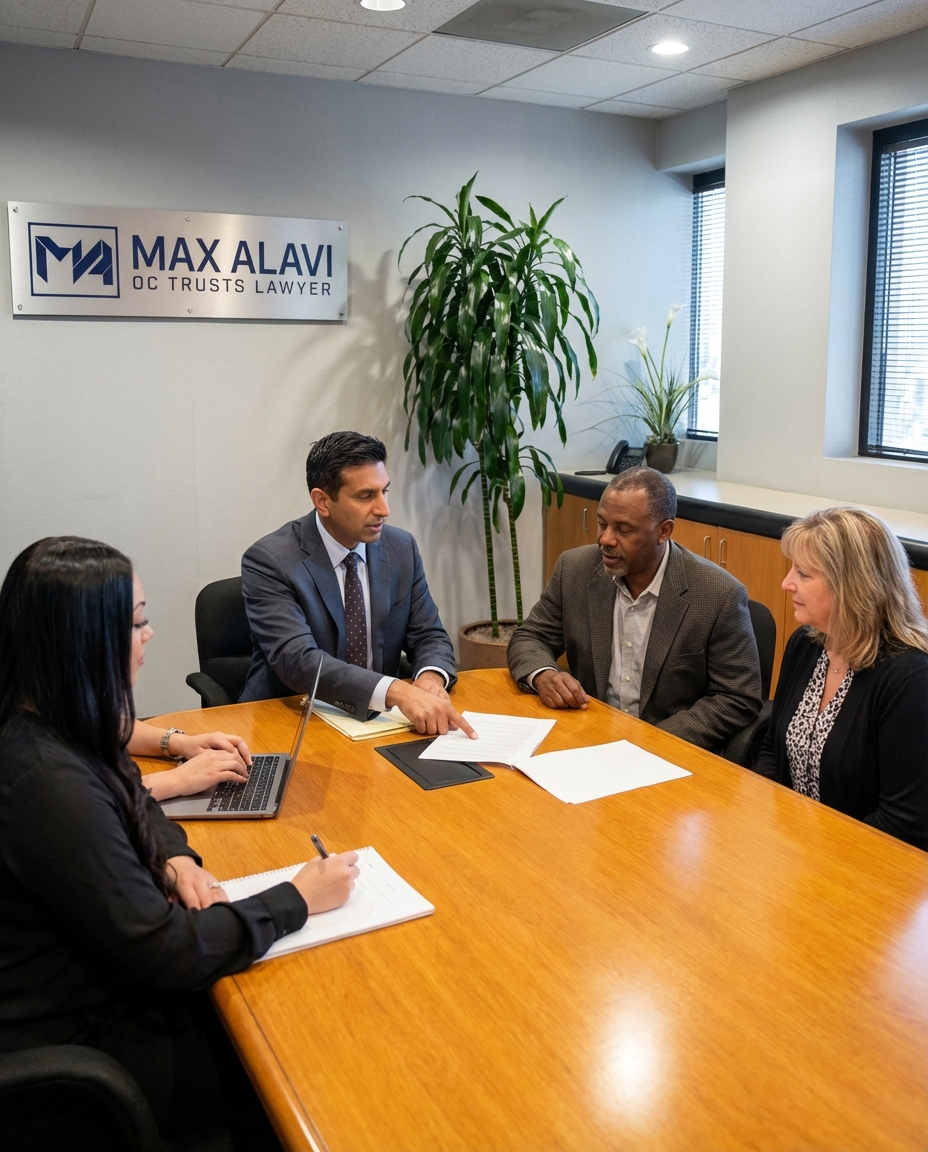
About Max Alavi, Attorney at Law
Max Alavi, Attorney at Law in Santa Ana is recognized for its integrity, depth of knowledge, and unwavering dedication to client success. With a primary focus on Trust Litigation, the firm also offers comprehensive services in probate administration, estate planning, and more. Founded on the principles of advocacy and personalized counsel, Max Alavi and his team have cultivated a reputation for providing clarity and confidence during some of life’s most challenging legal matters. The firm’s history is rooted in a genuine passion for helping families, individuals, and trustees resolve disputes efficiently and with compassion.
From its location in Santa Ana, Max Alavi, Attorney at Law sets itself apart by delivering attentive, honest communication and hands-on guidance throughout the legal process. The firm is distinguished by a client-centered approach that prioritizes transparency, respect, and solutions tailored to each client’s unique needs. Clients benefit from Max Alavi’s extensive legal expertise and the ethical standards that drive the firm’s work. Whether addressing complex Trust Litigation or navigating intricate estate issues, Max Alavi, Attorney at Law consistently achieves results through diligence, innovation, and a genuine concern for those they serve.
A Surprising Detail About Trust Litigation in Santa Ana
In Santa Ana, California, trust litigation can be impacted by a unique aspect of state law known as the “no contest” clause. Under California Probate Code, this clause allows a trust document to discourage beneficiaries from contesting its terms by threatening disinheritance. However, only certain types of trust contests—such as those without probable cause—trigger the enforcement of this penalty, making trust disputes both nuanced and highly strategic within the Santa Ana legal landscape.
Overview of Trust Litigation Laws in Santa Ana
Trust litigation in Santa Ana is shaped by California statutes and Orange County court procedures, dictating how disputes involving trusts are handled. According to Max Alavi, Attorney at Law, these cases often arise when beneficiaries, trustees, or other interested parties contest the terms, administration, or validity of a trust. Local regulations safeguard the intentions of the trust creator while balancing the rights of beneficiaries, and disputes may include issues like trustee misconduct, breach of fiduciary duty, or ambiguities in the trust document. The process in Santa Ana typically moves through stages including the filing of a petition, formal court proceedings, discovery, and potential settlement or judgment, making the guidance of experienced legal counsel crucial for navigating these complexities.
- Strict legal deadlines, or “statutes of limitations,” apply to trust challenges in Santa Ana courts.
- California law places significant fiduciary duties on trustees, and breaches can lead to removal or personal liability.
- Penalties may include reversal of asset transfers, monetary restitution, or, in severe instances, damage awards for losses caused by trustee misconduct.
“Potential resolutions to trust disputes may include negotiated settlements, mediation, trust modification, and, when necessary, contested trials in the Santa Ana courts.” – Insights from Max Alavi, Attorney at Law
With extensive experience in Santa Ana, Max Alavi, Attorney at Law provides clients with the expertise needed to address both straightforward and highly complex trust litigation matters. Their insights reflect a deep understanding of local court procedures and the nuances of California trust law, allowing them to analyze each case for possible procedural errors, improper trustee actions, or beneficiary rights violations. By leveraging robust negotiation skills and detailed case preparation, Max Alavi and his team are able to pursue settlements, mitigate potential penalties, and, if required, assertively represent clients at trial. Their knowledge of local regulations and resolutions provides clients with tailored strategies designed to protect their interests and achieve just outcomes in trust disputes.
Other Services Available
Trust Litigation |
https://www.octrustslawyer.com/trust-litigation |
Contested Will and Trust |
https://www.octrustslawyer.com/trust-will-contests/ |
Beneficiary Representation |
https://www.octrustslawyer.com/beneficiary-representation/ |
Trustee Removal |
https://www.octrustslawyer.com/trustee-removal-surcharge-actions/ |
Skilled Trust Litigation Representation by Orange County Trust Attorneys at Max Alavi, Attorney at Law
Facing trust litigation can feel overwhelming, but you don't have to navigate it alone. At Max Alavi, Attorney at Law, our dedicated attorneys thoroughly evaluate every aspect of your case to build a strong, effective defense tailored to your unique situation. Take the first step toward resolving your trust dispute—contact us today at (949) 706-1919 to schedule your free 30-60 minute initial consultation. Let us provide the knowledgeable guidance and compassionate support you deserve.
Santa Ana Demographics
Santa Ana, California, serves as the county seat of Orange County and is one of the region’s most populous urban centers. According to the U.S. Census Bureau, Santa Ana has an estimated population of approximately 310,000 residents as of the mid-2020s. The city’s population exhibits the following key demographic characteristics:
- Age Distribution: The median age in Santa Ana is around 33 years, with a relatively young population profile. A significant portion—over 25%—of residents are under the age of 18, reflecting a strong representation of children and youth.
- Diversity: Santa Ana is recognized for its remarkable cultural diversity. Hispanic or Latino residents comprise about 77% of the total population, giving the city a vibrant bicultural atmosphere. Other significant groups include White (non-Hispanic), Asian, and smaller populations of African American and multiracial residents.
- Socioeconomic Indicators:
- Median household income in Santa Ana is approximately $73,000–$75,000, which is below Orange County’s overall median but consistent with large urban centers statewide.
- The per capita income is estimated at just over $22,000.
- Poverty rates are higher than the county average, with roughly 15% of residents living below the poverty line.
- Notable Trends: Santa Ana’s population is stable, with modest long-term growth. The city’s significant immigrant population contributes to its dynamic demographic trends, with many households speaking Spanish as their primary language and participating in robust community and cultural traditions.
Santa Ana Probate Court System
Residents of Santa Ana access probate and trust legal services through the Superior Court of California, County of Orange. The Orange County Superior Court exercises jurisdiction over probate matters for the entire county, including Santa Ana. Relevant details include:
- Key Court: Probate and trust cases are handled at the Costa Mesa Justice Complex (also referred to as the Central Justice Center for particular filings), which provides dedicated probate services for all Orange County residents.
- Case Types Handled:
- Probate of wills and administration of decedents’ estates
- Trust proceedings: trust administration, modifications, accounting disputes, breaches of fiduciary duty, trust contest litigation
- Guardianship and conservatorship cases
- Protective proceedings for minors and dependent adults
- Surviving spouse determination and related matters
- Unique Features:
- The Probate/Mental Health Division of the Orange County Superior Court is known for centralized filings, robust self-help resources, and comprehensive online access to probate dockets and case records.
- Litigants and attorneys may use the court’s electronic filing and case management systems for streamlined submissions and status monitoring.
- Local court rules, in conjunction with the California Probate Code, govern all case procedures, deadlines, and notices.
- Spanish language assistance and interpreter services are readily available, reflecting the needs of Santa Ana’s diverse community.
For trust litigation in particular, the Orange County Superior Court offers nuanced case management, directing complex trust disputes to judges experienced in fiduciary, accounting, and trust contest matters. Legal clients in Santa Ana should note that all probate and trust litigation—regardless of the city of residence—falls under the countywide jurisdiction and is subject to Orange County-specific processes and requirements.
Family Demographics in Santa Ana
Santa Ana is characterized by strong family cohesion and a high proportion of family households, with notable attributes as follows:
- Household Composition:
- More than 80% of households are classified as family households, markedly higher than national averages.
- The average household size is 4.4 persons, among the highest for cities in California, reflecting larger multi-generational families.
- Non-family and single-person households are comparatively less common than in surrounding communities.
- Divorce Rates:
- Divorce rates in Santa Ana are below the state average, reflecting demographic factors and cultural emphasis on family stability. Countywide, Orange County processes thousands of divorce filings annually.
- Income Levels:
- The median family income is estimated at about $66,000–$70,000, with a substantial share of households supported by multiple earners.
- Per capita income remains lower than in more affluent nearby cities, but community support programs help address economic disparities.
- School Systems and Social Programs:
- Public education in Santa Ana is provided by the Santa Ana Unified School District (SAUSD), which is one of the largest in California. SAUSD serves over 50,000 students across numerous elementary, middle, and high schools.
- The district offers a variety of language immersion, special education, and advanced placement programs to address diverse student needs.
- Santa Ana supports a wide array of social programs targeting family well-being, including Head Start, after-school enrichment, family wellness centers, and nutrition assistance programs.
- Strong partnerships exist with local nonprofits and government agencies to offer accessible family counseling, legal aid, and community health services.
These factors combine to create a family-focused community environment that is both diverse and resilient, offering robust infrastructure for households seeking legal assistance with probate, trust litigation, or family law matters in Santa Ana.
Trust Litigation
Areas We Serve
At Max Alavi, Attorney at Law, we have decades of experience in dealing with complex trust litigation matters throughout California. When you hire our legal team, you are bringing on the best and toughest litigators around to aggresively fight on your behalf.
What Our Amazing Clients Have To Say



Why Clients Choose Max Alavi, APC
- Super Lawyers recognition based on peer review
- Extensive experience in California probate law
- Millions recovered in trust and probate litigation
- Strategic handling of trust and estate disputes
- Proven advocacy for surviving spouses and heirs
- Clear guidance through complex probate matters
- Outstanding dedication to every one of our clients




Let's Work Together - Tell Us Your Needs
At Max Alavi, Attorney at Law, APC, we understand the complexities of California probate law and are committed to providing solutions for trust and estate disputes. Contact us today to speak with one of our legal staff.