
Westminster Probate And Trust Administration Attorney
Top Ranked Trust & Probate Lawyers in California
5-Star Client Rating | Read Our Reviews
Westminster Probate Administration Services
At Max Alavi, Attorney at Law, we proudly serve the Westminster community with comprehensive Probate Administration services tailored to your needs. Our team brings decades of focused experience guiding clients through the probate process with clarity, compassion, and efficiency. We are committed to helping families and executors navigate complex legal requirements, resolve disputes, and protect assets, ensuring peace of mind during difficult times. Choose us for your Westminster probate matters and benefit from our detail-oriented approach, responsive communication, and a proven record of positive outcomes.
“Let us shoulder the legal burden so you can focus on what matters most.”
- Extensive probate administration experience in Westminster
- Personalized legal strategies for each client situation
- Prompt, transparent communication every step of the way
- Dedication to upholding your loved one’s wishes and estate interests
Our Trust Litigation Case Process

1. Case Evaluation
We begin with a full review of the trust, will, financial records, and family history. Our legal team will identify your rights, deadlines, and the best legal path before anything is filed.

2. Court Filings
The case formally begins when a probate petition or trust lawsuit is filed in California probate court, often in Orange County Superior Court. This step sets the legal issues, brings all parties into the case.

3. Discovery and Settlement
Both sides exchange documents, take depositions, and file motions to address disputes. Many trust and probate cases resolve here through settlement discussions or court ordered mediation.

4. Trial and Resolution
If no agreement is reached, the case proceeds to trial before a probate judge. After a ruling, the court orders distributions, removals of fiduciaries, or financial recovery, and we handle enforcement or appeals if needed.
Begin Your Free Case Evaluation Now
Call to schedule a free and confidential consultation with a trust litigation lawyer.

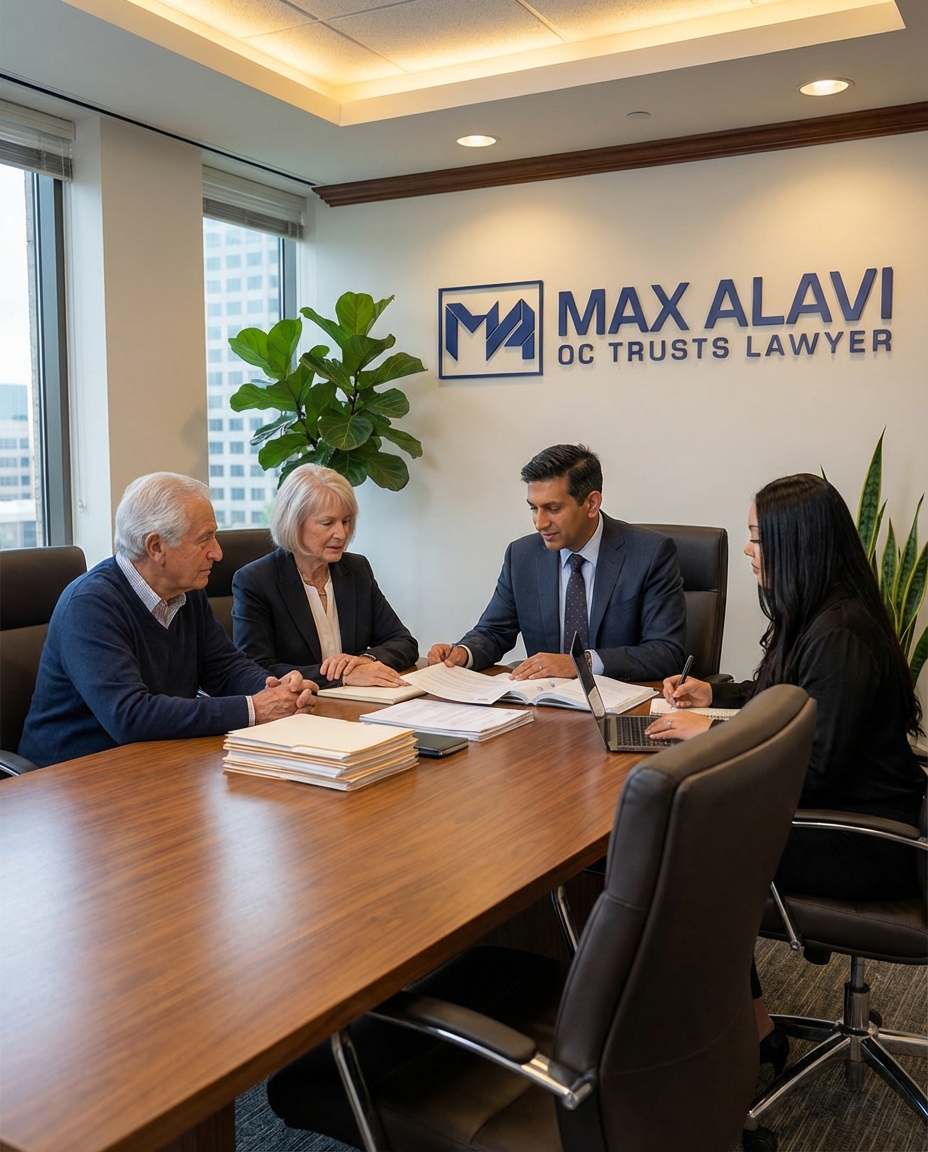
About Max Alavi, Attorney at Law
With a longstanding commitment to personalized legal service, Max Alavi, Attorney at Law has become a trusted name in Westminster for individuals seeking guidance in Probate Administration and related legal matters. Since its inception, the firm has focused on empowering clients through every step of the estate process, ensuring they are well-informed and confident in their legal decisions. By merging deep legal expertise with a responsive, compassionate approach, Max Alavi, Attorney at Law stands out for its ability to resolve even the most complex probate and trust cases efficiently and effectively.
At the core of Max Alavi, Attorney at Law’s culture is a dedication to integrity, transparency, and client success. Proudly serving the Westminster community, the firm not only specializes in Probate Administration but also provides comprehensive counsel in trust and estate law. Drawing from a strong history of client satisfaction and a reputation for clear communication, the legal team is known for its meticulous attention to detail and customized solutions. Max Alavi, Attorney at Law values the relationships built with clients, offering reliable guidance and unwavering support through every stage of the legal process.
An Interesting Fact About Probate Administration in Westminster
In California, probate administration—especially in places like Westminster—offers a unique alternative to full probate through the “small estate affidavit” process. If a deceased person’s assets in California are valued at $184,500 or less, heirs may be able to bypass the lengthy court-supervised probate entirely. This allows families in Westminster to collect assets quickly and efficiently without extensive court intervention, making probate administration more accessible and less stressful for smaller estates.
Overview of Probate Administration Laws in Westminster
Probate administration in Westminster is governed primarily by California state laws, which dictate how a deceased individual’s estate is settled and assets are distributed. Max Alavi, Attorney at Law, highlights that probate is a court-supervised process required in many circumstances when an individual passes away without a comprehensive estate plan, or when assets are not held in trust. The process includes authenticating the will, appointing an executor or administrator, and ensuring that creditors are paid and assets are distributed to rightful beneficiaries. Local regulations emphasize timely notice to all interested parties, adherence to strict court deadlines, and regular accountings submitted to the probate court. The guidance of a knowledgeable legal team is essential in navigating Westminster’s probate procedures, addressing challenges ranging from will contests to tax implications.
- The probate process can be time-consuming, typically lasting from several months to over a year, depending on estate complexity and potential disputes.
- Failure to comply with probate laws and court deadlines may result in penalties or personal liability for executors and administrators.
- Possible resolutions include expedited distribution for small estates, negotiation to settle creditor claims, and seeking court approval for unique asset situations.
"Max Alavi, Attorney at Law, offers clients in Westminster practical insights and seasoned advocacy, ensuring that every phase of probate administration is managed efficiently and with the utmost compliance to California’s legal standards."
Drawing on extensive experience with probate administration in Westminster, Max Alavi, Attorney at Law is adept at guiding clients through every step of this complex process. The firm’s expertise spans from preparing court-required filings and managing creditor claims to orchestrating asset appraisals and responding to beneficiary concerns. With a deep understanding of local court processes, their team minimizes delays and avoids procedural pitfalls that can increase costs or prolong administration. Their professional approach also offers clients peace of mind, ensuring optimal resolutions such as securing court approval for distributions or mediating family disputes, while reducing potential penalties and safeguarding the intentions of the decedent.
Other Services Available
Probate Administration |
https://www.octrustslawyer.com/probate-trust-administration/ |
Estate Planning |
https://www.octrustslawyer.com/estate-planning/ |
Compassionate Guidance from an Orange County Probate Administration Attorney at Max Alavi, Attorney at Law
If you are navigating the complexities of probate administration, you deserve an experienced advocate by your side. At Max Alavi, Attorney at Law, our attorneys meticulously evaluate every detail of your probate matter to ensure your rights and interests are fully protected. We make the process understandable and manageable, providing you with the assurance you need. Take the first step today and schedule a free 30–60 minute consultation by calling (949) 706-1919.
Westminster Demographics
Westminster, California is a city located in northern Orange County, recognized for its dynamic population and cultural diversity. As of the most recent U.S. Census estimates, Westminster has a population of approximately 89,000 residents. Demographic and socioeconomic details include:
- Population Size: Around 89,000 residents as of the 2020s.
- Age Distribution: Median age is in the early 40s, with approximately 21% of residents under age 18 and a substantial senior population (ages 65+) representing close to 18% of residents.
- Ethnic Diversity: Westminster is a highly multicultural community, with one of the largest Vietnamese-American populations in the United States (comprising over 40% of the total population), along with White, Hispanic/Latino, and smaller representations of other Asian and Pacific Islander groups.
- Socioeconomic Indicators: Median household income is estimated around $70,000–$79,000, somewhat below Orange County’s average. Per capita income is approximately $29,000–$33,000. Approximately 12% of the population lives below the federal poverty line, reflecting a modest but significant economically disadvantaged segment.
- Notable Trends: The city continues to experience steady demographic change, with ongoing growth in its older adult population and gradual diversification in household composition.
Westminster Probate Court System
Probate and trust administration matters for residents of Westminster are adjudicated through the Superior Court of California, County of Orange. The pertinent details of the local probate court system include:
- Jurisdiction: All probate, trust, and estates cases are handled at the county level, with Westminster falling under Orange County Superior Court’s jurisdiction.
- Main Probate Courthouse: The majority of probate hearings—including decedent estates, trusts, conservatorships, and guardianships—are held at the Costa Mesa Justice Complex (North Justice Center in Fullerton also hears some matters).
- Case Types Handled:
- Estate administration
- Will contests
- Trust litigation and administration
- Conservatorships and guardianships
- Elder and dependent adult protective proceedings
- Minor’s compromise hearings
- Unique Features:
- Orange County maintains a robust online case access system for probate matters, enabling attorneys and parties to track case filings, calendars, and outcomes remotely.
- Local probate rules are published and available for review, providing clarity on filings, hearing timelines, and forms required for probate and trust administration.
- A formal Probate Examiner reviews filings for procedural and substantive compliance before hearings are held.
- Legal Support Services: The court provides resources for self-represented litigants and maintains public probate calendars, facilitating transparency for all parties involved.
Family law, including divorce, custody, and support matters, is handled through the Family Law Division of the same Superior Court, primarily at the Lamoreaux Justice Center in Orange for Westminster residents.
Family Demographics in Westminster
Westminster exhibits a community structure heavily oriented toward families but also features a significant single-adult and senior demographic. Key family demographic indicators include:
- Household Structure:
- Estimated 27,000 households in total.
- About 70% of households are classified as family households; the remainder are non-family or single-occupancy dwellings.
- Average household size is approximately 3.2 persons, reflecting large multi-generational and family households.
- Marital Status and Divorce:
- The community includes a substantial share of married-couple families with and without children.
- Divorce rates are in line with or slightly below state averages, with Orange County processing thousands of divorce filings annually, including those from Westminster residents.
- Family and Per Capita Income:
- Median family income is slightly higher than the overall household median, estimated near $81,000–$85,000 annually, indicating the prevalence of dual-income families.
- Per capita income is below county averages, consistent with larger household sizes and service-sector employment patterns.
- Schools and Social Programs:
- Served by both the Westminster School District (elementary and middle schools) and the Huntington Beach Union High School District (high schools), which are recognized for serving a linguistically and culturally diverse student population.
- The community benefits from multiple Head Start, early childhood, and after-school enrichment programs, as well as targeted social services through Orange County agencies.
- Programs supporting immigrant and refugee families are especially prominent, reflecting the city’s Vietnamese and broader Asian heritage.
Trust Litigation
Areas We Serve
At Max Alavi, Attorney at Law, we have decades of experience in dealing with complex trust litigation matters throughout California. When you hire our legal team, you are bringing on the best and toughest litigators around to aggresively fight on your behalf.
What Our Amazing Clients Have To Say



Why Clients Choose Max Alavi, APC
- Super Lawyers recognition based on peer review
- Extensive experience in California probate law
- Millions recovered in trust and probate litigation
- Strategic handling of trust and estate disputes
- Proven advocacy for surviving spouses and heirs
- Clear guidance through complex probate matters
- Outstanding dedication to every one of our clients




Let's Work Together - Tell Us Your Needs
At Max Alavi, Attorney at Law, APC, we understand the complexities of California probate law and are committed to providing solutions for trust and estate disputes. Contact us today to speak with one of our legal staff.