
Sued by a Beneficiary? A Trustee’s First 5 Steps to Protect the Trust (and Yourself)
Top Ranked Trust & Probate Lawyers in California
 5-Star Client Rating | Read Our Reviews

When serving as a trustee, choosing the right inheritance litigation lawyer is crucial to ensure the trust is administered properly and legal obligations are met. Trustees have a fiduciary duty to act in the best interests of the beneficiaries, and mistakes can lead to personal liability. Therefore, selecting an attorney with the right experience and approach is essential.
First, look for a lawyer with extensive experience in trust and estate law, including handling disputes, breach of fiduciary duty claims, and complex asset management issues. An attorney familiar with both state and federal regulations can guide trustees through legal requirements and help prevent costly errors.
Strong communication skills are also critical. Trustees must understand their responsibilities and receive clear guidance on how to handle conflicts, respond to beneficiary concerns, and make informed decisions. A lawyer who explains complex legal concepts in plain language can make this process much more manageable.
Additionally, seek a lawyer with strategic thinking and problem-solving skills. Trustees often face delicate situations involving multiple beneficiaries or ambiguous trust provisions. An effective attorney can advise on dispute resolution, negotiate settlements, and, if necessary, represent the trustee in court, all while minimizing conflict and protecting the trust. Speak to an Orange County inheritance litigation lawyer at Max Alavi, Attorney at Law, at (949)706-1919 to learn how we can help.
Key Takeaways involving Trustees and Inheritance Litigation
- Trustees have quite a bit on the line because they can be held personally liable if they are found to have breached their own fiduciary duties
- The choice of an inheritance litigation attorney is crucial, given both the high financial stakes involved and the potential family impacts
- Not every attorney is qualified to litigate a case involving an inheritance. Some may not have experience in this area
- You are interested in an inheritance litigation attorney’s track record, both in terms of winning court cases and resolving disputes without the need for a trial
- Not only is it important to hire the right inheritance litigation lawyer, but you must also retain counsel at the most advantageous time
- Speak to an inheritance litigation attorney to learn how they can help you as a trustee
The Importance of Getting Legal Help as a Trustee

Serving as a trustee is a position of significant responsibility, requiring careful management of trust assets and strict adherence to fiduciary duties. Trustees are legally obligated to act in the best interests of the beneficiaries, maintain impartiality, manage assets prudently, and comply with the terms of the trust. Because of the complexity of these responsibilities, obtaining legal help is vital.
An experienced trust attorney provides guidance on interpreting the trust document, ensuring that distributions, investments, and decisions align with the grantor’s intentions. Legal help is especially important when the trust involves complex assets, multiple beneficiaries, or potential disputes, as even minor mistakes can lead to allegations of breach of fiduciary duty and personal liability.
A lawyer also assists with compliance with federal and state tax laws. Trusts often have intricate tax obligations, including filing trust returns, paying estate or income taxes, and managing tax deductions. Mistakes in these areas can result in penalties or audits, making professional guidance invaluable.
Additionally, trustees may face conflicts among beneficiaries or unclear provisions in the trust. Legal counsel can help navigate disputes, mediate conflicts, or represent the trustee in court if necessary. Lawyers also help maintain proper documentation and reporting, ensuring transparency and reducing the risk of claims.
Ultimately, working with a knowledgeable trust attorney helps trustees fulfill their duties effectively, minimize legal exposure, and ensure that the trust operates smoothly, honoring the grantor’s wishes while protecting both the trust and the trustee. Hiring an inheritance litigation attorney if there are any disputes can help provide the trustee with more protection, especially when there is the prospect of personal liability for the trustee.
The Importance of Choosing the Right Inheritance Litigation Lawyer
Choosing the right inheritance litigation lawyer is critical when disputes arise over estates, wills, or trusts. Inheritance disputes can be emotionally charged and legally complex, often involving multiple parties with competing interests. A skilled attorney provides guidance, protects your rights, and helps ensure that the distribution of assets is handled fairly and in accordance with the law.
The right inheritance litigation lawyer brings extensive experience in probate and trust law, understanding both state-specific regulations and federal rules that may affect the case. They can evaluate the validity of wills or trusts, identify potential breaches of fiduciary duty, and assess claims of undue influence, fraud, or errors in estate administration. Their knowledge helps clients avoid common pitfalls that can prolong litigation or reduce the value of the estate.
An experienced attorney also offers strategic advice on negotiation, mediation, and, if necessary, courtroom representation. They help clients gather evidence, communicate effectively with all parties, and navigate complex procedural requirements.
Ultimately, selecting the right inheritance litigation lawyer ensures that your interests are protected, disputes are resolved efficiently, and the estate is distributed as intended. This decision can make a significant difference in achieving a fair outcome while minimizing emotional and financial stress during a challenging time.
The Inheritance Litigation Attorney Should Be Different Than the Estate Planning Lawyer
While estate planning and inheritance litigation both deal with the distribution of assets, the roles of attorneys in these areas are fundamentally different. Your estate planning attorney helps you create wills, trusts, and other instruments to manage your assets during your lifetime and ensure they are passed to your beneficiaries according to your wishes. Their focus is on proactive planning, advising you on legal strategies, and drafting documents that minimize taxes, avoid probate, and prevent disputes.
On the other hand, an inheritance litigation lawyer represents clients in disputes over estates or trusts after a loved one has passed. These disputes may involve allegations of undue influence, breach of fiduciary duty, improper trustee actions, or challenges to the validity of a will or trust. Importantly, a litigation lawyer’s role is adversarial. They advocate on behalf of a client to protect their interests in court or through negotiation.
Using the same attorney for both planning and litigation can create conflicts of interest. The attorney who drafted the estate documents may be ethically restricted from challenging their own work or representing a beneficiary in a dispute involving their planning decisions.
Hiring a separate inheritance litigation lawyer ensures that you have independent legal representation focused solely on protecting your rights in a dispute. This separation provides objectivity, avoids conflicts, and gives you a lawyer whose sole mission is to advocate aggressively on your behalf when disagreements over an estate arise.
Qualities to Look for in an Inheritance Litigation Lawyer
When choosing an inheritance litigation lawyer, several key qualities can determine how effectively they handle your case:
- Experience in Estate and Trust Law: A strong inheritance litigation lawyer should have extensive experience with probate, wills, trusts, and fiduciary duties. Knowledge of state-specific laws and court procedures is essential for successfully navigating complex disputes.
- Strong Advocacy Skills: Litigation often involves negotiation, mediation, or courtroom representation. The lawyer should be a confident advocate, capable of presenting evidence clearly, arguing persuasively, and protecting your interests.
- Attention to Detail: Inheritance disputes often hinge on fine details in legal documents, such as wills, trust agreements, and financial records. A meticulous lawyer can identify errors, inconsistencies, or omissions that can affect your case.
- Communication and Empathy: These cases can be emotionally charged. The right lawyer should communicate clearly, explain complex legal concepts in plain language, and handle sensitive situations with tact and professionalism.
- Strategic Thinking: An effective lawyer not only understands the law but also develops a tailored strategy, weighing risks and benefits to achieve the best possible outcome.
The Inheritance Litigation Lawyer Should Have a Track Record of Success
When selecting an inheritance litigation lawyer, one of the most important factors to consider is their track record of success. Litigation involving estates, wills, and trusts can be highly complex and contentious, often requiring a lawyer to navigate nuanced legal arguments, procedural rules, and emotionally charged family dynamics. A lawyer with a proven history of favorable outcomes demonstrates the skill, experience, and strategic thinking necessary to handle these challenges effectively.
A strong track record indicates that the lawyer has successfully represented clients in similar disputes, whether it involves contesting the validity of a will, addressing breaches of fiduciary duty, or challenging trust provisions. It also reflects the lawyer’s ability to negotiate settlements, advocate persuasively in mediation, and present compelling arguments in court when necessary. Clients can often gauge a lawyer’s experience by reviewing case results, client testimonials, and years of experience in probate and trust litigation.
Beyond winning cases, a successful lawyer understands how to protect clients’ interests while minimizing unnecessary delays and costs. They know which strategies are most effective, how to anticipate opposing arguments, and when to pursue litigation versus settlement.
An Inheritance Litigation Lawyer Should Be Able to Resolve Cases Without Going to Court
While litigation is sometimes necessary in inheritance disputes, a skilled inheritance litigation lawyer understands that going to court is not always the best or most efficient option. Resolving disputes outside of court through negotiation or alternative dispute resolution methods, such as mediation or arbitration, can save clients significant time, expense, and emotional stress.
A lawyer experienced in out-of-court resolutions works to identify common ground between parties, helping to facilitate productive discussions that lead to mutually acceptable agreements. They can draft settlement proposals, clarify legal obligations, and communicate effectively with all parties to reduce misunderstandings and prevent escalation. This approach is particularly valuable in inheritance disputes, where family relationships and sensitive dynamics can make courtroom battles especially contentious.
Even when disputes initially appear to require litigation, an attorney who excels at negotiation can often settle the case favorably before filing lawsuits, avoiding costly court fees and lengthy delays. They also prepare contingency plans, ensuring that if negotiations fail, the client’s rights are fully protected in court.
At What Point Should a Trustee Hire an Inheritance Litigation Lawyer?

A trustee holds a position of significant responsibility, tasked with managing trust assets and distributing them according to the grantor’s wishes. While many trust administration matters proceed smoothly, there are situations where a trustee should consider hiring an inheritance litigation lawyer to protect both themselves and the trust.
One clear indication is when disputes arise among beneficiaries. Conflicts over distributions, perceived favoritism, or challenges to the validity of the trust can quickly escalate. A lawyer can guide the trustee on legal obligations, mediate disagreements, and develop strategies to minimize the risk of costly litigation.
Another critical moment to seek legal counsel is when the trustee faces allegations of breach of fiduciary duty. Trustees are held to strict standards of care and loyalty, and even unintentional mistakes can lead to personal liability. An attorney can advise on compliance with fiduciary duties, help document decisions, and provide representation if disputes or claims are filed.
Trustees should also consider hiring a lawyer when dealing with complex trust assets or tax issues. Real estate, business interests, and investment portfolios can present legal and financial challenges that require trusted guidance. Additionally, if a trustee is unsure how to interpret ambiguous provisions in the trust document, an attorney can provide clarity and protect against potential legal challenges.
Our Inheritance Litigation Lawyers are Standing by to Help Trustees
Ultimately, a trustee should engage an inheritance litigation lawyer at the first sign of conflict, uncertainty, or potential liability. Early legal guidance helps ensure the trust is administered correctly, beneficiaries’ rights are respected, and the trustee is protected from personal legal exposure. At Max Alavi, Attorney at Law we are ready to help. Call us today at (949)706-1919 to schedule an appointment.
Frequently Asked Questions – Trustees and Inheritance Litigation
How can a lawyer protect me from personal liability as a trustee?
A lawyer advises on fiduciary duties, ensures compliance with trust terms, and develops strategies to defend against claims.
How do I know if a lawyer has experience with trustee representation?
Ask about past cases involving trustee disputes, success rates, experience in local probate courts, and familiarity with managing complex estates.
Do I have to pay the legal fees personally?
In most cases, the assets of the trust or estate are used to pay the inheritance litigation lawyer.

Begin Your Free Case Evaluation Now
Call to schedule a free and confidential consultation with a trust litigation lawyer.

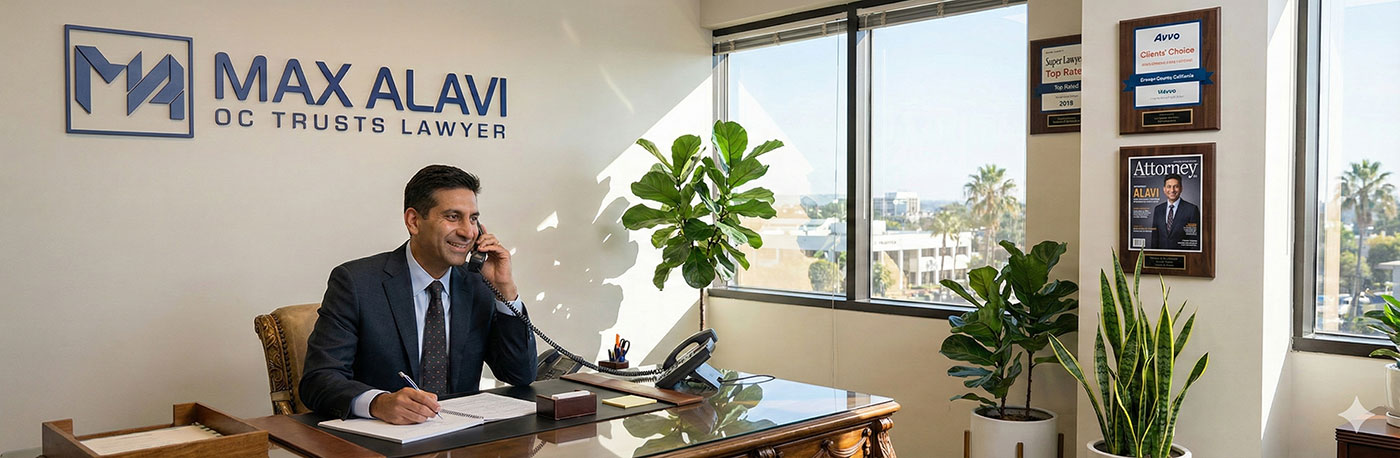
Why Clients Choose Max Alavi, APC
- Super Lawyers recognition based on peer review
- Extensive experience in California probate law
- Millions recovered in trust and probate litigation
- Strategic handling of trust and estate disputes
- Proven advocacy for surviving spouses and heirs
- Clear guidance through complex probate matters
- Outstanding dedication to every one of our clients


What Our Amazing Clients Have To Say



Let's Work Together - Tell Us Your Needs
At Max Alavi, Attorney at Law, APC, we understand the complexities of California probate law and are committed to providing solutions for trust and estate disputes. Contact us today to speak with one of our legal staff.