
Will Forgery in Probate: How Courts Evaluate Signature Fraud When You Contest a Will in California
Top Ranked Trust & Probate Lawyers in California
 5-Star Client Rating | Read Our Reviews

☰ Quick Facts About This Page
- A forged will is invalid under California law
- Forgery is a recognized basis for a will contest
- The burden of proof rests on the person challenging the will
- Courts closely examine the testator’s signature
- Handwriting experts are often used in probate litigation
- Witness testimony can support or weaken forgery claims
- Forgery is different from undue influence or lack of testamentary capacity
- Strong evidence is required to succeed in probate court
- Forgery cases are highly fact-specific
- Early legal advice can protect your rights
Understanding Suspected Will Forgery and Signature Fraud in California Probate
When a will surfaces in California probate that appears suspicious, families are often left wondering whether the document truly reflects the testator’s intentions—or whether forgery, fraud, or a forged signature played a role. Forged wills can dramatically alter how a loved one’s estate is distributed, sometimes cutting out rightful heirs entirely.
This article explains how California courts evaluate forgery claims, what evidence is required to contest a suspicious will, and how to establish that someone may have signed the document without authorization. If you are considering contesting a will in California, understanding how courts analyze suspected signature fraud is essential.
Begin Your Free Case Evaluation Now
Call to schedule a free and confidential consultation with a trust litigation lawyer.

Click or Tap On Any Topic Below To Expand
What Is Will Forgery Under California Probate Law?
Under California law, a will must be signed by the testator or by another person at the testator’s direction and in their presence. This requirement is established under California Probate Code § 6110. If a signature is forged, the will is not valid.
Forgery occurs when someone signs the testator’s name without authorization, alters a will after execution, or presents a document that was never genuinely approved by the testator. A forged signature is a severe form of fraud, and California probate courts take such allegations seriously.
When a will is forged or altered, it does not reflect the testator’s true intentions or true wishes. As a result, courts may refuse to admit the will to probate or invalidate it entirely after litigation.
How Do You Contest a Will in California Based on Forgery?
To contest a will in California, an interested party—such as a disinherited heir or beneficiary—must file a petition in the California probate court. Will contests are governed by Probate Code § 8250, which allows objections to a will’s validity.
Forgery is a recognized ground to file a will contest, along with lack of testamentary capacity, undue influence, and improper execution. In these cases, the contestant must allege that someone has forged the testator’s signature or tampered with the document.
Because probate litigation is complex, working with an experienced probate attorney is critical. Courts require convincing evidence, not mere suspicion, when evaluating whether a will was forged.
What Signs Suggest a Will Might Be Forged?
Certain red flags can indicate that a will might be forged. One common issue arises when the will is executed shortly before the testator’s death, especially if it significantly alters prior estate plans. Sudden changes benefiting one beneficiary can raise concerns.
Other signs of a forged will include inconsistencies in the signature, missing witnesses, or discrepancies compared to the testator’s known handwriting. Families may notice that the testator never mentioned the new will during their lifetime.
Forgery claims often overlap with allegations of undue influence or lack of testamentary capacity, but forgery focuses on whether the testator actually signed the document.
What Evidence Do California Courts Use to Prove Forgery?
California courts require strong evidence to prove forgery. The burden of proof lies with the person contesting the will. Courts analyze both direct and circumstantial evidence when deciding a case in court.
Key evidence includes photographs of the testator’s signature, the testator’s signature on other documents, and medical or personal records showing the testator’s condition at the time the will was executed. Parties should gather evidence early and collect as much evidence as possible.
Evidence needed to contest a will must support your claim and demonstrate that the signature was not genuine. Even a single piece of evidence, when combined with others, can help establish forgery or tampering.
How Do Handwriting Experts and Witness Testimony Affect Forgery Claims?
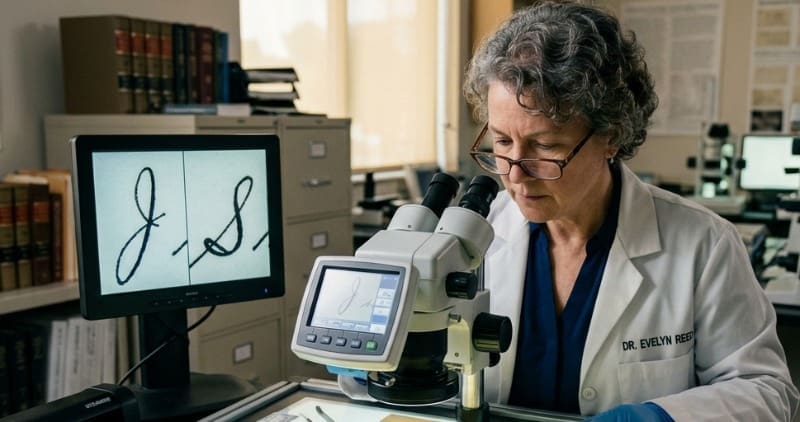
A handwriting expert often plays a critical role in forgery cases. These experts compare the signature on the disputed will to the testator’s signature on other documents to determine whether the same person wrote them. Their testimony can be persuasive in a California court.
Witness testimony also matters. Testimonies from people who observed the signing—or who were familiar with the testator’s handwriting—can support or undermine claims of fraud. Courts evaluate whether witnesses followed statutory formalities under Probate Code § 6110(c).
When combined, expert analysis and credible testimony can provide convincing evidence to support your claim during probate litigation.
What Happens If a Will Is Found to Be Forged in a California Probate Court?
If a will is found to be forged, the court will declare it invalid. The estate is then distributed under a prior valid will, if one exists, or under intestate succession pursuant to Probate Code § 6400.
Under intestate succession laws, heirs inherit according to statutory rules rather than the forged document. This ensures the loved one’s estate is distributed fairly and in accordance with California law.
In some cases, the individual who committed the forgery may face additional legal action. Successfully contesting a will due to forgery helps protect your rights and ensures the estate is administered according to the testator’s true intentions.
Frequently Asked Questions About Will Forgery in California Probate
1. How do I know if a will is forged in California?
Signs of forgery may include unusual signatures, missing witnesses, sudden changes to beneficiaries, or inconsistencies with prior estate plans.
2. Who has the burden of proving a will is forged?
The person contesting the will has the burden of proof and must present clear and convincing evidence in California probate court.
3. Can a will be invalidated if the signature is forged?
Yes. Under California Probate Code § 6110, a will must be properly signed. A forged signature makes the will invalid.
4. What kind of evidence is used to prove forgery?
Courts consider handwriting comparisons, expert testimony, witness statements, and documents showing the testator’s condition at the time of signing.
5. Do I need a handwriting expert to contest a forged will?
In many cases, yes. Handwriting experts can provide critical analysis comparing known signatures to the one on the disputed will.
6. How long do I have to contest a forged will in California?
You generally have a limited time after the will is admitted to probate, often 120 days, to file a will contest under Probate Code § 8270.
7. What happens if the court finds the will was forged?
The court will invalidate the will and distribute the estate according to a prior valid will or California intestate succession laws under Probate Code § 6400.
8. Can forgery claims be combined with other legal claims?
Yes. Forgery claims are often brought alongside claims of undue influence, fraud, or lack of testamentary capacity.
9. What court handles will forgery disputes in California?
These disputes are handled in the probate division of the California Superior Court, such as the Orange County Superior Court.
10. Do I need an attorney to contest a forged will?
Yes. Working with an experienced probate litigation attorney, such as Max Alavi, Attorney at Law, APC, is critical to properly gather evidence and present your case in court.

Why Clients Choose Max Alavi, APC
- Super Lawyers recognition based on peer review
- Extensive experience in California probate law
- Millions recovered in trust and probate litigation
- Strategic handling of trust and estate disputes
- Proven advocacy for surviving spouses and heirs
- Clear guidance through complex probate matters
- Outstanding dedication to every one of our clients




What Our Amazing Clients Have To Say



Common Trust & Probate Terms
Below are some common terms and helpful definitions used in Trust and Probate. We are here to help educate our clients.
Click on any of the terms below to understand what they mean.
Trust Litigation vs. Probate Litigation
Trust litigation involves legal disputes related to the administration, interpretation, or validity of a trust. These cases typically happen after a trust becomes irrevocable and often involve trustee misconduct, accounting disputes, or challenges based on undue influence.
Probate litigation happens during the probate process and involves disputes over wills, appointment of personal representatives, creditor claims, or asset distribution. While both are handled in probate court, the governing statutes and procedural rules can differ.
Understanding the differences between trust litigation and probate litigation is very important because deadlines, notice requirements, and available solutions vary significantly between trust and probate cases.
Example:
A beneficiary files a trust petition to remove a trustee for breach of duty, while a sibling files a probate petition contesting a will based on lack of capacity.
What is a Beneficiary?
In California trust and probate law, a beneficiary is a person or entity entitled to receive property, income, or other benefits from a trust or estate. Beneficiaries may be specifically named in a trust or will, or they may inherit under California’s intestate succession laws if no valid estate plan exists.
Once a trust becomes irrevocable, California law grants beneficiaries enforceable rights, including the right to receive notice of trust administration, request information, and demand an accounting. Beneficiaries also have legal standing to file petitions in probate court when they believe a trustee or personal representative has breached fiduciary duties.
Statutory References:
Example:
After the settlor’s death, beneficiaries receive a statutory trust notice and later file a petition to compel a trustee accounting.
What is a Trustee?
A trustee is the individual or entity responsible for administering a trust and managing trust assets in accordance with the trust instrument and California law. Trustees act as fiduciaries and must always place the interests of beneficiaries ahead of their own.
California law imposes strict duties on trustees, including the duty of loyalty, duty of care, duty of impartiality, and duty to keep beneficiaries reasonably informed. Alleged violations of these duties are among the most common causes of trust litigation.
Statutory References:
Example:
A trustee who favors one beneficiary over others may be sued for violating the duty of impartiality.
What is a Fiduciary?
A fiduciary is a person or entity legally obligated to act in the best interests of another. In California trust and probate law, fiduciaries commonly include trustees, executors, administrators, and sometimes agents acting under a power of attorney.
Fiduciaries must act with the highest duty of loyalty, honesty, and care. They are prohibited from self-dealing, conflicts of interest, or using estate or trust property for personal benefit.
Breach of fiduciary duty is one of the most common bases for trust and probate litigation in California.
Statutory References:
Example:
A trustee who loans trust funds to themselves without authorization may be sued for breach of fiduciary duty.
What is Probate?
Probate is the court-supervised process used in California to administer a deceased person’s estate when assets are not held in a trust or transferred by non-probate methods.
The probate court oversees the appointment of a personal representative, payment of debts, resolution of disputes, and final asset distribution.
Probate litigation arises when disagreements occur during administration, including will contests, creditor disputes, and challenges to the personal representative’s conduct.
Statutory References:
Example:
Heirs challenge the validity of a will during probate, delaying distribution of estate assets.
What is Intestate Succession?
An intestate estate occurs in California when a person dies without a valid will or trust that disposes of their probate assets. When this happens, California’s intestate succession laws determine who inherits the decedent’s property and in what proportions, regardless of the decedent’s informal wishes or family expectations.
Intestate estates are administered through probate court, and the court appoints an administrator to manage the estate.
Distribution is strictly controlled by statute, prioritizing spouses, children, and other relatives in a defined order. Intestate estates frequently lead to probate litigation in California when heirs dispute heirship, asset classification, or administrator conduct.
Statutory References:
Example:
A decedent dies without a will, and multiple relatives file competing petitions in probate court to determine heirship and appoint an administrator.
What is Undue Influence?
Undue influence under California law occurs when excessive persuasion overcomes a person’s free will and results in an inequitable outcome, particularly in connection with a will or trust. Courts evaluate factors such as vulnerability, authority, tactics used, and the resulting benefit.
California law also establishes a presumption of undue influence when certain individuals, such as caregivers or fiduciaries, receive disproportionate benefits under estate planning documents.
Statutory References:
Example:
A caregiver who drafts trust amendments and receives most of the estate may trigger a statutory presumption of undue influence.
What is a Trust Notice?
A Trust Notice is a mandatory written notice that must be served when a revocable trust becomes irrevocable, most often after the settlor’s death.
A trust notice informs beneficiaries and heirs of the trust’s existence and their rights.
This notice is legally significant because it triggers the deadline for filing a trust contest. If proper notice is not served, the statute of limitations may be extended.
Statutory Reference:
Example:
A successor trustee sends notice within 60 days, starting the 120-day period to challenge the trust.
What is a Will Contest?
A will contest is a legal challenge filed in California probate court disputing the validity of a will. Grounds include lack of testamentary capacity, undue influence, fraud, duress, or improper execution.
Contesting a Will must comply with strict filing deadlines and procedural requirements, making early legal action critical.
Statutory References:
Example:
An heir contests a will signed shortly before death, alleging lack of mental capacity.
Trustee vs. Executor
A trustee manages and administers assets held in a trust, while an executor (a type of personal representative) administers assets that are subject to probate under a person's will. Although both roles involve fiduciary responsibilities, they operate under different California laws.
Trustees generally act outside of ongoing court supervision unless a dispute occurs, whereas executors operate within the probate court system from the outset.
This distinction often determines whether a dispute is classified as trust litigation or probate litigation.
Example:
A trustee is sued for mismanaging trust investments, while an executor is challenged in probate court for improper estate distributions.

Max Alavi, Attorney at Law, APC is a premier Orange County, California law firm specializing in trust litigation, trust disputes, and probate. Led by AV Rated and Super Lawyers awarded attorney Max Alavi, the firm represents clients in complex, high value estate disputes, including contested trusts, breach of fiduciary duty claims, and financial elder abuse matters. With over 30 years of legal experience and millions recovered in litigation, the firm is known for strategic, results driven representation in California probate courts.
Let's Work Together - Tell Us Your Needs
At Max Alavi, Attorney at Law, APC, we understand the complexities of California probate law and are committed to providing solutions for trust and estate disputes. Contact us today to speak with one of our legal staff.